back to top Related Posts Plugin for WordPress, Blogger...
CLICK HERE FOR FREE BLOGGER TEMPLATES, LINK BUTTONS AND MORE! »
English French German Spain Italian Dutch Russian Portuguese Japanese Korean Arabic Chinese Simplified

Follow me on Google +

Like me on Facebook!

Thanks for following!

Follow me at Bloggers.com

The Greek Housewife - Find me on Bloggers.com
GreekBloggers.com

Vote for me!

Photos of Greece

Popular Posts

Greek word of the day

Join Me!

Ponderwonders
Amanda’s Books and More
Tots and Me
Tots and Me
Super Sunday Sync
At Home Take 2
Marine Wife Home and Life

Blogroll

VICKILICIOUS. Powered by Blogger.
Showing posts with label Greek Trivial Pursuit. Show all posts

February 15, 2013

YOU KNOW YOU'RE GREEK WHEN.... (part 2)


 The following list has been compiled from an online student group and on a Facebook group called "Greeks Invented Everything", and even though some of it is written from the perspective of Greek-Americans, it's still highly amusing and relevant:

You know you're Greek when.......(part 2)

  • You have a family wedding to attend at least twice a year. 
 
  •  You or at least most of your uncles own a spit 


  • You consider soccer the eighth wonder of the world.


Your cheeks receivetheir weekly work out every time you visit an aunt. 


  • Your last name ends with: opolous, os, as, or is.
  • Your last name consists of the entire alphabet .


 When leaving a house, you stand at the front door for a half hour more and talk 


  • You expect atleast 600 people at your wedding 

  •  


  • You tell your parents you're seeing someone and they start sending out wedding invitations. 


  •  


  • You're home an hour late and you're already listed as a missing person. 

    • You break a leg, and yiayia thinks your life is over. 


  • You tell your parents you're having a party.

  • They buy out the whole supermarket. 


  • It doesn't matter people can't hear what you're talking about - you talk so much with your hands that people know what you're going on about anyway.  

  •  


  • You go to a wedding, and are introduced to cousins that you never knew existed.

  •   


  • You tell mama you're not hungry and she thinks you have an eating disorder. 


  • Your yiayia / mama / thia has a miracle cure for everything. 


  •  


  • Your mother or father still feels the need to tell you, "katse kala" ("behave") in public 

  •  


  • You are familiar with the phrase, "Sto leo yia to kalo sou" (I'm saying this for your own sake!)

  •  


  • You have one or more of those porcelain figurines in your house or you have broken one of those porcelain figurines and mama still hasn't forgiven you for it


  •  


  • You have a bottle of OUZO in your house right now 


  •  


  • Add aki to the end of any American word, and it becomes Greek 


  • Your family inheritance includes olive trees and xorafyia (farming fields)


  • If you missed part 1 you can read it here!


    All photos are courtesy of Google images.

    January 31, 2013

    Greek Trivial Pursuit


    RANDOM GREEK FACT #4


    WEDDING RINGS IN GREECE


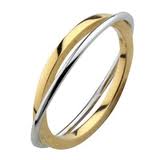
    These are samples of what Greek wedding rings look like! No, unfortunately, we don't have the custom of the engagement ring with the 'rock' (even though we do get these, too, they're just not signifying betrothal or wedding proposal -  just love.)


    The most common are the plain gold ones, (almost always 18K) even though the last few years couples chose more elaborate rings that have at least some design (yes, they pick them out together!)...


        .... such as these...


     ...of course the couple wears matching wedding bands!


    Many couples, instead of gold, chose platinum and white gold wedding rings that have also become very popular. There are so many beautiful designs! It's simply what you can afford. Traditionally, it's a cost that the groom picks up but lately young couples share all the expenses.


     Now, how about many little 'rocks' on the wedding ring? (I'm okay with that!!!!!)


    In the USA, and in other countries as well, the wedding ring is worn on the left hand. In Greece though it is worn on the right hand. 

    When a Greek couple becomes engaged they do so in the presence of family and friends by exchanging rings. The priest blesses the rings and the couple will wear the rings on their left hand until the wedding.  (Of course after the engagement there is always a big feast.)

    These same engagement rings will serve as the wedding rings! The engaged couple will not buy another pair. These rings have been blessed and are binding them. At the wedding ceremony, the priest once again blesses the rings at which time the bride and groom switch the rings to the right hand.


    Right before the wedding the couple gives the rings to the goldsmith to have them polished and inscribed on the inside with their names and date of the wedding. After the ceremony, the man will be wearing his ring that has the name of his wife engraved and vice versa. 


    "Wedding rings are symbols of eternal love and devotion just as the circle of these gold wedding rings has no beginning or end."

    "


    All photos are courtesy of Google images.

    November 2, 2012

    GREEK TRIVIAL PURSUIT


    RANDOM GREEK FACT #3

    "Yiayia" means Grandma
    

          In Greek culture and society, Grandma and Grandpa play an important or dominant role in the upbringing of their grandchildren, since often both parents are working and they become the babysitters. Their presence may be important but they unwittingly, perhaps from excessive affection and care, contribute to the bad eating habits of their grandchildren. 

          For example, Greek grandmothers seem to have X-ray vision and are able to see through your skin and into your stomach so don't lie to them that you are full, there's still room in your stomach (it's not quite exploding yet!)

          They make you feel like it's a sin not to clean up your plate, they even make jokes about how you've eaten everything in your plate and she doesn't even have to wash it. And she looks at it with pride that you ate it all! Did I mention that Grandma portions are very 'generous'?

    These phrases have grown generations and generations of Greek youngsters:
     
     -- "one more mouthful for Grandma, one for mommy, one for daddy ...,"

    "...am I going to have a mouthful for each and every one in the family tree?...."
     

     -- "your last bite is your strength "
     
     
    "The exorcist's" Linda Blair's baby photo: "If you force me to eat this I'll show you strength!"
     
     
    -- "eat because children are starving in Ethiopia "
     
    (through grinding teeth) "Well, send it to them..."
     

    If these tricks don't work then the intimidation method begins:

     -- "Eat because the bogeyman will come,"
     
    "Bogeyman? Really, Grandma!"
     
    -- "Eat because you won't grow to be tall and strong"
     

    "Heard that before! I have no strong feelings-one way or another!"
     
     
    If all of these fail then the last resort is sweet corruption:

     -- "Eat all your of your food and I'll give you some chocolate".

    "ALL of this for a tiny piece of chocolate? OMG!"
     

    A-N-Y-T-H-I-N-G to see the plate being emptied of food!
     
          It seems that today's grandparents suffer from what we call the WW2 Occupation Syndrome. I don't know if it is a valid scientific term but it's widely used and after 60-70 years, still continues to haunt us, carrying it from generation to generation until today.
     
          During the difficult years of WW2 occupation, our ancestors experienced great famine that killed hundreds of Greeks, leaving behind bad memories to our grandmothers and grandfathers. This resulted in the mentality that "when there is food, it should be consumed in abundance" and none of it must be thrown away and that the "extra" pounds mean strength and health.  This mentality was passed on to the next generations and even though these attitudes are fading anymore they have lead us today to the point of talking about obesity in young kids. 

          Childhood obesity is a growing concern, increasingly gaining epidemic trends worldwide. In Greece,  statistics say that almost 1 in 3 children today are obese.

     So, please Grandma when I say I'm full,
                  
                           I really mean I'm full!!!


    All photos are courtesy of Google images.


    October 26, 2012

    GREEK TRIVIAL PURSUIT


    RANDOM GREEK FACT #2


          Feta is a type of Greek salted curd cheese traditionally made from sheep's milk or a combination of sheep's and goats' milk. The defining characteristic of feta cheese is that it is brined or pickled. The brining process (from a week to several months) gives feta cheese a salty, tangy flavor and a crumbly consistency. It is stored in its own water brine.


    What you should know about feta cheese:
              
    1. It dries out and sours quickly when removed from its brine; for that reason, blocks of packaged feta cheese are covered with brine, and should be stored, refrigerated, in the brine until used. Feta is available in most supermarkets as a solid block packed in brine, or crumbled. So you better buy in large quantities (it's  also cheaper that way) in/with its brine.

    2. If the feta is too salty for your taste, take the piece you want to use and soak in a mixture of 1/2 water and 1/2 fresh milk for an hour.

    3. Feta is not a "melting" cheese. It is widely used in cooked dishes and, while it softens, it retains much of its original shape.

    October 18, 2012

    GREEK TRIVIAL PURSUIT


          I thought I should do justice to my blog's name 'The Greek Housewife' by honoring the "Greek" part. So I decided I should have regular posts giving my dear readers little bits of information about Greece or being Greek! They will be numbered random Greek facts that I will put under a category (perhaps a page) named 'Greek Trivial Pursuit'! I hope you will like reading them and get to know me better in the process!

    So here goes 'Random Greek Fact #1' :


          Knitting, crochet and embroidery are time-honored traditions in Greece. Needlework was always a traditional activity for the women in Greece. The skills are handed down from generation to generation. The women learn the needlework from their mothers and grandmothers. It was a major component of household handicrafts. In the old days since she was young, a girl had to be initiated into the art of needlework in order to sew her dowry (pillows, towels, doilies, tablecloths, aprons, sheets, curtains, and whatever else could adorn her clothes and house. Many of the embroidery images were symbolic, originating in nature, history and legend.             

          Today most women have abandoned this tradition and don't do any needlepoint except for necessary mending of the clothes! I happen to be one of them! Except for really big works of cross-stitching, that I did when I was much younger, I don't know how to do anything else. I didn't learn it from my mom when I was younger and I'm really sceptical about starting now!

          My mom on the other hand is really talented and hasn't given up on it. It's her hobby! Lately she has taken upon it to crochet a queen sized blanket for each of her 4 grandkids! WOW! Mom! What a project!

          I have posted photos of her fascinating work and I have a lot more to show you in the future. Here are some samples:


    For more photos of my mom's masterpieces check out my posts Mommy's Doilies Part 1  and  Part 2!!!